xinyuanshun@xyspaper.com
+86-13316621858
+86-0750-3766098

Kraft Paper is one of the most common papers used for packaging, but it is not the correct choice for every application. White wrapping paper, laminated paper, Food Paper, medical paper, release liners, rust-proof paper, cardboard, and Paper Strapping are selected when the package requires a specific appearance or technical function.
Packaging usually needs to perform one or more jobs: contain a product, protect its surface, resist moisture, separate adhesive, prevent metal corrosion, provide printed information, or create a retail appearance.
A paper that performs well as carton void fill may be unsuitable for direct food contact. A strong kraft sheet may still lack the release property needed for labels or adhesive tapes.
Selection should therefore begin with the purpose of the layer rather than its color or price.
Brown kraft paper is frequently used for parcel wrapping, carton lining, interleaving, and cushioning. It is easy to fold and can be converted into sheets or rolls.
White kraft paper provides a cleaner appearance for retail packaging and branded wrapping. Printing performance should be checked against the selected surface and printing process.
Offset paper or other printable grades may be used for inserts, instructions, internal wraps, or lightweight packaging where clear graphics are important.
Untreated paper absorbs moisture and oil. When the application requires improved resistance, a coating or laminated structure may be necessary.
PE-laminated paper is one example of a combined structure used where paper alone would not provide the intended barrier. The layer arrangement, coating weight, and sealing behavior must match the product and packing process.
For food applications, temperature and grease exposure are particularly important. Baking, frying, frozen food, and dry-product packaging place different demands on paper.
Labels, tapes, and self-adhesive materials normally require a release liner. The liner protects the adhesive until application and must peel away at the correct force.
The release coating must remain uniform across the roll. Uneven release can interrupt label converting or cause adhesive products to separate at the wrong stage.
Roll flatness, winding tension, edge quality, and splice control are also important because release materials are often processed at speed.
Metal components may require paper that helps manage corrosion risk during storage and export. Rust-prevention paper should be selected according to metal type, protection time, humidity, and packaging closure.
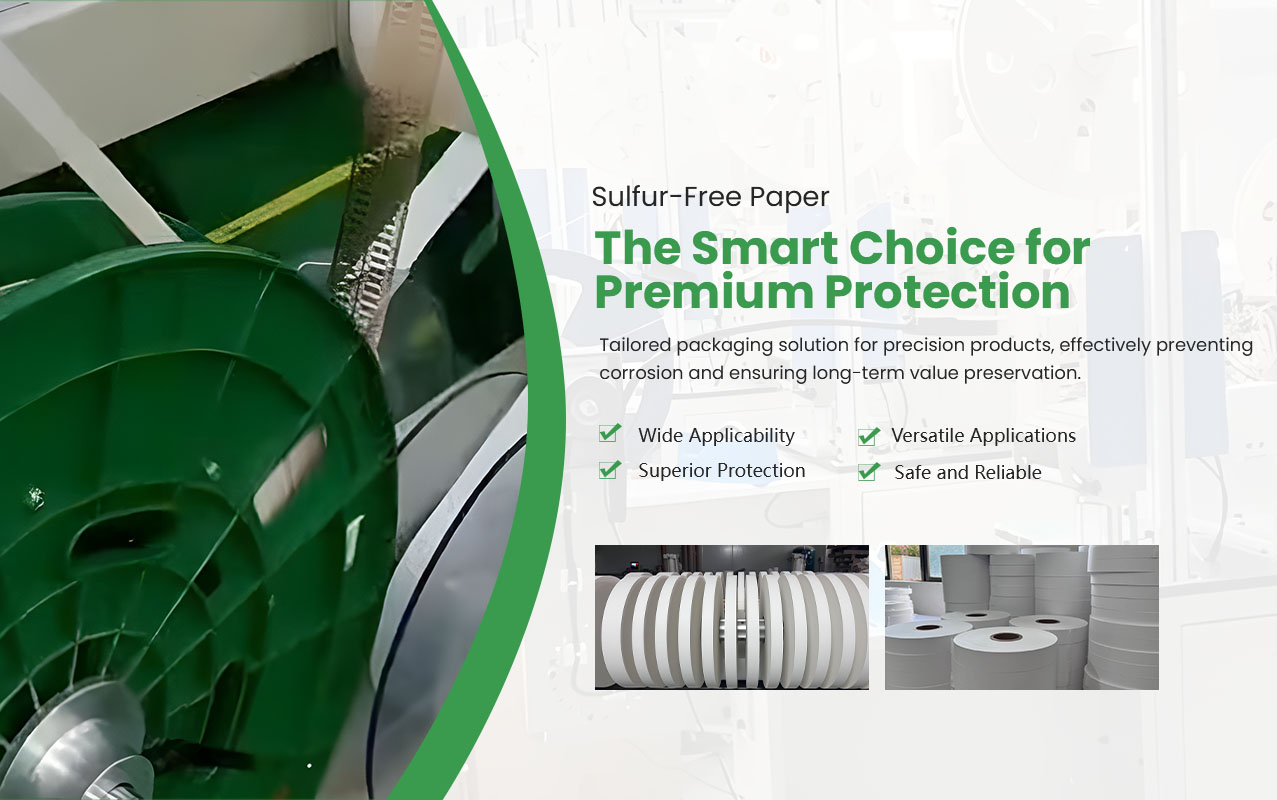
Sulfur-free grades may be needed for sensitive industrial or electronic uses. Acid-free kraft paper may be selected where the packaged item should not be exposed to acidic paper conditions.
Protective paper is only one part of the system. Clean product surfaces, controlled storage, suitable outer packaging, and correct sealing also affect the result.
The buyer should specify grammage, thickness, width, roll length, core diameter, sheet size, surface treatment, and tolerance requirements.
Machine applications also require information about line speed, web tension, cutting method, sealing temperature, and roll-change conditions. A paper that appears acceptable in a small sample can still feed poorly when supplied as a large industrial roll.
Export packaging must protect the paper from moisture, crushing, dirty surfaces, and damaged edges. Pallet and carton formats should be selected according to transport and warehouse handling.
Our factory has worked with paper and new packaging materials since 2008. We integrate production, processing, warehousing, distribution, technical consultation, and after-sales support.
As a reliable export Packaging Paper supplier, we offer multiple paper and film categories for buyers who need different materials from one supply source. Specifications can be developed around roll width, grammage, coating, lamination, slitting, rewinding, labeling, and packing.
Before mass production, samples can be reviewed against the actual application. Approved specifications then provide a clearer reference for repeat orders and help reduce unexpected changes during downstream use.
Share the product being packaged, required function, paper format, technical specifications, quantity, shipping destination, and downstream process. We can recommend a suitable packaging paper and prepare an export quotation with production and packing details.