xinyuanshun@xyspaper.com
+86-13316621858
+86-0750-3766098

Packaging paper includes general wrapping grades and specialized papers developed for food, medical products, labels, adhesives, metal protection, strapping, printing, and moisture-resistant packaging. Selecting a type begins with the required function because appearance alone does not reveal barrier, release, strength, or contact properties.
Kraft Paper is widely used for wrapping, bags, carton filling, surface separation, and protective layers. It can be supplied in brown or white grades and in several weights.
Its practical strength makes it suitable for many industrial and retail applications. However, standard kraft paper does not automatically provide water, oil, heat-seal, food-contact, or rust-prevention performance.
General wrapping paper may prioritize foldability and presentation. Buyers should determine whether the paper will be used for direct wrapping, carton lining, void filling, or decorative presentation.
Laminated paper combines paper with another material to achieve functions that untreated paper cannot provide alone. Depending on the structure, lamination may improve resistance to water, grease, air, or product leakage.
The paper layer provides printability, stiffness, or a familiar surface, while the added layer contributes the required barrier or sealing property.
Buyers should confirm which side contacts the product, whether the structure must be heat-sealed, and how it will be converted. Temperature, pressure, and line speed can affect sealing results.
Food Paper must be selected according to the type of food, contact conditions, temperature, grease level, and applicable market requirements. Paper for dry food is not necessarily suitable for oily or high-temperature applications.
Medical wrapping paper serves a different purpose. Strength, cleanliness, process compatibility, and the intended sterilization or packaging method may all be relevant.
These materials should never be replaced with ordinary wrapping paper based only on similar color or thickness. Documentation and application testing are important parts of selection.
Release paper carries or protects adhesive products until they are ready for use. Its surface treatment controls how easily labels, tapes, protective films, or other adhesive layers separate from the liner.
Release performance must be balanced. Excessive release may cause materials to lift too early, while insufficient release can make peeling difficult or damage the adhesive layer.
Base-paper strength, surface uniformity, coating consistency, curl control, and dimensional stability influence downstream converting.
Rust-proof paper is used in selected metal packaging systems to reduce corrosion risk during storage or transportation. Its effectiveness depends on the metal type, packaging enclosure, moisture conditions, protection period, and handling method.
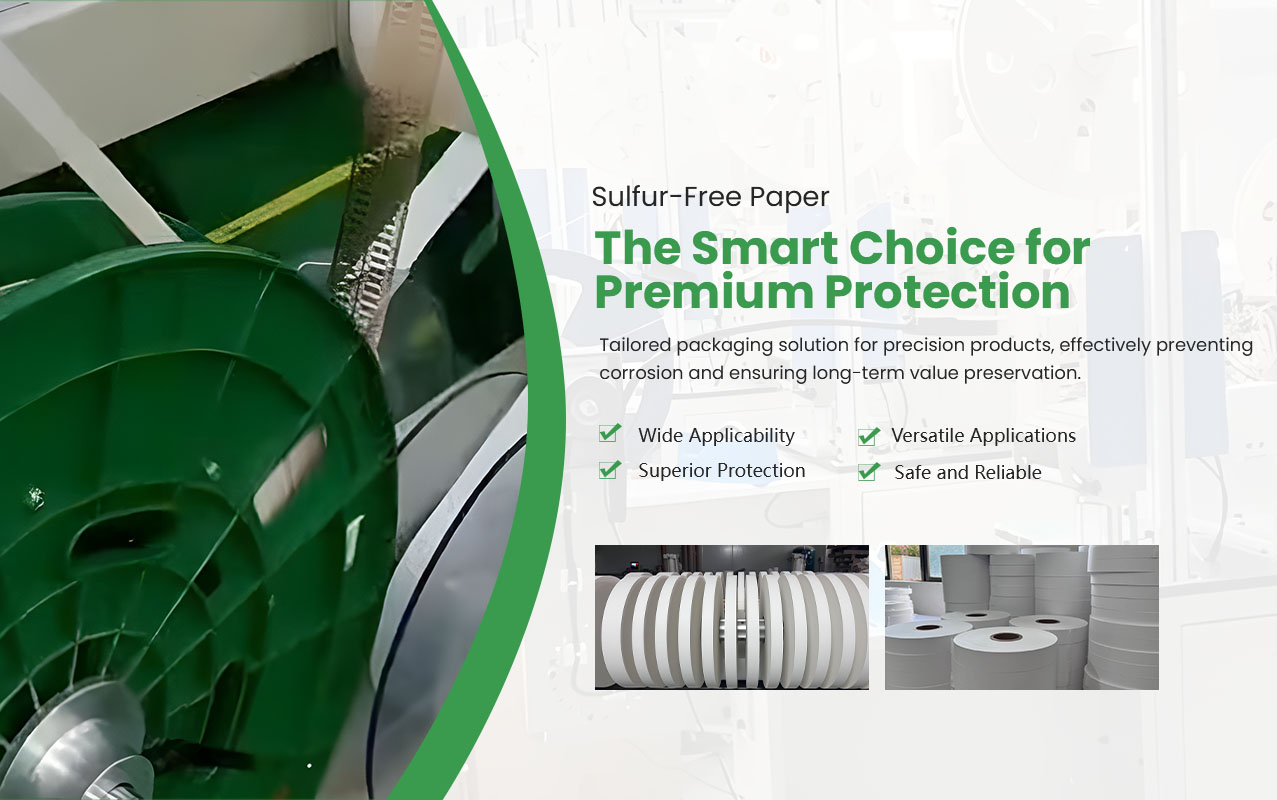
Sulfur-free paper is used where sulfur-related contamination must be limited. It can be relevant to sensitive metal, electronics, or specialized industrial applications.
The buyer should provide the actual material being protected and the storage environment. A generic request for anti-rust paper may not be sufficient to select the correct grade.
Paper strapping is used to bundle, band, or organize products. Required tensile strength, sealing method, width, thickness, and equipment compatibility should be confirmed.
Printed paper, black cardboard, offset paper, release film, and industrial wrapping film may also form part of a complete packaging system. The best combination depends on whether the priority is protection, containment, identification, presentation, or machine processing.
As a commercial grade packaging paper supplier, we review the product, process, and operating environment before recommending a material. Our range covers kraft, laminated, food, medical, release, label, rust-proof, sulfur-free, strapping, printing, and other packaging grades.
Our production and processing capabilities support slitting, rewinding, lamination, and specification adjustments. Warehousing and distribution help coordinate recurring demand across different paper categories.
Commercial buyers should provide samples and realistic process conditions. Testing paper only by hand may not reveal feeding, sealing, cutting, release, or winding behavior at production speed.
Send us the packed product, required paper function, contact conditions, machine process, dimensions, monthly usage, and destination market. We can recommend a commercial-grade paper category and prepare a quotation based on the required specification.
Previous: What Paper Is Used for Packaging?
Next: What Is A Packing Paper?