xinyuanshun@xyspaper.com
+86-13316621858
+86-0750-3766098

Medical packaging refers to the materials and packaging systems used to contain, protect, identify, transport, store, and present medical devices, medicines, diagnostic products, and healthcare supplies.
It includes more than the box seen on a pharmacy shelf. A complete packaging system may contain an inner pouch, wrapping paper, protective tray, carton, label, shipping case, and other components.
For sterile medical products, packaging must also remain compatible with the selected sterilization process and help maintain the required condition throughout storage and transportation.
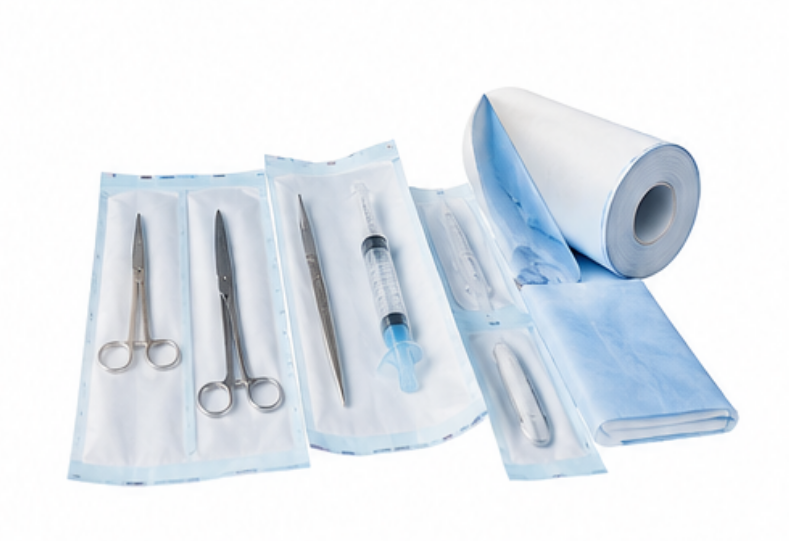
Medical products may use several packaging layers. Each layer performs a different function and should be selected according to the product, distribution environment, and applicable requirements.
Primary packaging directly contains or surrounds the medical product.
Examples include sealed pouches for medical instruments, blisters for tablets, vials for liquid products, and wrapping paper around instrument sets.
The material should not introduce contamination, unwanted particles, or harmful interactions with the packaged product.
Secondary packaging groups or protects one or more primary packages.
It may provide product identification, instructions, batch information, light protection, and additional resistance to compression during handling.
Common examples include paperboard cartons, folding boxes, and grouped medical supply packs.
Transport packaging protects products during warehousing and delivery.
Corrugated cartons, dividers, pallets, wrapping films, and cushioning materials may be used to reduce impact, vibration, moisture exposure, and crushing.
A sterile barrier system is the minimum packaging layer that helps prevent microorganisms from entering the package after sterilization.
It should also allow the medical item to be presented without unnecessary contact with external surfaces.
Packaging materials must match the selected sterilization method.
Porous medical paper may be suitable for systems requiring steam or gas penetration, while other applications may require plastic film, foil, laminate, or rigid trays.
A packaging material should not be assumed to work with every sterilization method without complete system testing.
A strong packaging material can still fail if the seal is contaminated, uneven, too weak, or difficult to open correctly.
Medical packaging development may therefore include testing for:
Seal strength
Package integrity
Puncture resistance
Opening performance
Transportation stress
Storage and aging conditions
Different products require different combinations of strength, breathability, moisture resistance, visibility, and chemical protection.
| Material | Common Packaging Function |
|---|---|
| Medical Kraft Paper | Porous wrapping and selected sterile packaging structures |
| Plastic film | Visibility, moisture resistance, and pouch construction |
| Laminated paper | Combined paper appearance and barrier properties |
| Foil laminate | Protection from moisture, oxygen, and light |
| Rigid tray | Structural support for devices and instruments |
| Paperboard carton | Identification and secondary protection |
Material selection should be based on the product and packaging process rather than appearance alone.
Medical Wrapping Paper may be used around selected instruments, medical consumables, protective products, and healthcare supply sets.
Its functions may include physical protection, separation from external contamination, compatibility with a suitable sterilization process, and easier handling during storage.
Before ordering medical wrapping paper, buyers should confirm:
Intended medical product
Sterilization method
Paper grammage
Thickness requirement
Width and roll dimensions
Strength and porosity
Sealing or converting process
Storage environment
Testing requirements
The paper is one part of the complete packaging system. The finished structure must still be evaluated for the intended application.
We integrate paper production, processing, warehousing, distribution, and after-sales support.
Our product range includes Medical Kraft Paper, medical wrapping paper, laminated paper, Packaging Paper, release materials, and other specialty paper and film products.
Customized width, thickness, roll specifications, converting requirements, and packaging methods can be discussed according to the buyer’s equipment and finished-product design.
Developing packaging for medical devices, consumables, protective products, or pharmaceutical supplies?
Send us your intended product, sterilization method, paper width, thickness, roll size, converting process, packaging requirements, and purchasing quantity. Our team will prepare a suitable Medical Wrapping Paper proposal for evaluation.