xinyuanshun@xyspaper.com
+86-13316621858
+86-0750-3766098

Energy density is often discussed through cathode chemistry, anode design, electrolyte system, and battery pack structure. But inside the cell, the separator quietly affects how much energy can be used safely. If the separator is too thick, has poor pore distribution, or limits lithium-ion transport, the battery may lose valuable internal space and face higher resistance during charge and discharge.
For EV battery producers, cell manufacturers, energy storage companies, and lithium battery material buyers, the separator used in lithium ion battery should not be treated as a passive film. It is a functional layer that must balance thickness, porosity, insulation, mechanical strength, and electrolyte compatibility.
Every layer inside a lithium-ion cell occupies space. When the separator is unnecessarily thick, less room remains for active materials. In EV batteries, this can limit the final energy density and reduce the value of other material upgrades.
A thinner separator can help improve internal space efficiency, but it cannot be selected by thickness alone. If the film becomes too weak or unstable, it may increase the risk of puncture, shrinkage, or internal short circuit.
Battery producers need a separator that helps improve energy density without sacrificing cell safety. The separator must isolate the positive and negative electrodes while allowing lithium ions to move during charging and discharging.
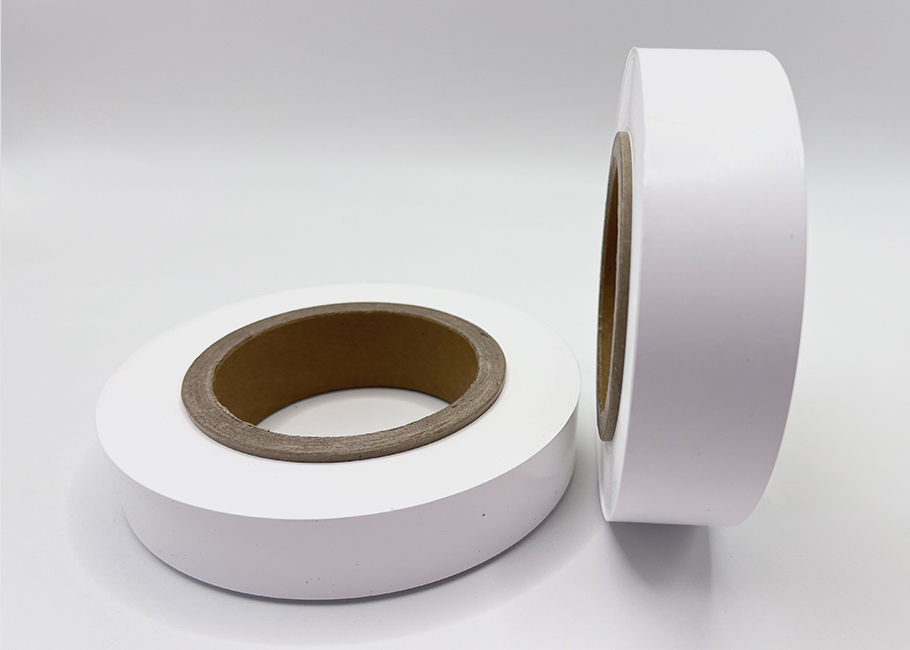
Our Li Ion Battery Separator uses PP and PE material directions, with customizable width and thickness according to project requirements. This allows buyers to match separator specifications with different cell structures and production lines.
A separator with low porosity may restrict lithium-ion movement. This increases internal resistance and can affect charge and discharge efficiency. For EV battery producers, poor ion transport may weaken power performance and reduce usable capacity.
High-performance separators often need controlled pore size and porosity. The pore size range can be between 10nm and 500nm, while porosity may reach 40%–74% depending on the design. The goal is not simply to make more pores, but to keep the pore structure uniform and suitable for stable ion transmission.
The separator needs open pathways for ions, but it must still prevent direct electronic contact between electrodes. This is why electronic insulation remains important. Insulation resistance can reach more than 10¹⁶ Ω・cm, supporting electrode isolation inside the battery.
For cell manufacturers, this balance is the main challenge: faster ion transport without losing internal safety protection.
As battery designs push for higher energy density, electrode expansion, winding pressure, stacking tension, and assembly stress can all increase. If the separator cannot resist local stress, it may be damaged during manufacturing or long-term cycling.
Puncture strength and tensile strength should be checked before bulk use. A separator with stronger mechanical performance can help maintain shape and pore stability during cell assembly and operation.
If the separator deforms, folds, shrinks, or becomes damaged during handling, the ion pathway may become uneven. This can affect battery consistency from cell to cell.
For large EV battery projects, separator stability is not only a material issue. It affects production yield, quality control, and pack-level performance consistency.
A separator used for mobile electronics may not face the same demand as EV power batteries. EV batteries need higher safety margins, longer cycle life, and better consistency across many cells.
For EV battery producers, the separator used in lithium ion battery should be tested under the real application target: high energy output, repeated charge and discharge, temperature change, and long-term electrolyte exposure.
Energy storage batteries may run for years under repeated cycling. Separator chemical stability becomes important because the film must remain stable in electrolyte over long service time.
The separator should maintain physical and chemical performance in common carbonate electrolytes, helping battery systems keep stable operation over repeated charge and discharge cycles.
A thinner separator may help energy density, but if the film lacks puncture strength, tensile strength, or chemical stability, the battery producer may face higher safety risk and lower yield.
A better procurement decision should compare:
Separator thickness
Pore size range
Porosity level
Electronic insulation
Puncture strength
Tensile strength
Electrolyte compatibility
Thermal and storage stability
Width customization
Packaging protection
These points help buyers avoid choosing a separator only by one attractive specification.
Different battery lines may use different cell formats, coating widths, winding designs, or stacking processes. Customizable separator width helps buyers reduce trimming waste and match the separator to production equipment more accurately.
This is important for factories that need better material yield while improving cell performance.
A high-quality separator can still lose performance if it is stored poorly. Temperature fluctuation, humidity, dust, mechanical pressure, or chemical contamination may affect the pore structure and surface condition.
Storage should keep the separator dry, clean, and protected from impact. For lithium battery factories, warehouse control is part of cell quality control.
Separators are sensitive materials. During shipping and handling, pressure, folding, scratching, or impact may damage the film. Carton packaging should protect the separator and help prevent deformation before production use.
Battery material buyers should confirm packaging method, handling marks, and warehouse requirements before shipment.
Improving energy density is not only about making one layer thinner. The separator must help save internal space, allow efficient lithium-ion transport, maintain electrode isolation, resist puncture, and stay stable during long battery operation.
For EV batteries, energy storage systems, electric vehicles, mobile devices, and advanced lithium battery production, the separator decision should be made with cell design, production process, and safety requirement together.
A suitable separator used in lithium ion battery can support better energy density when thickness, porosity, ion transport, insulation, strength, and stability are matched properly. Battery producers should test the separator with real cell design instead of relying only on a single parameter sheet.
For lithium battery factories, EV battery producers, and energy storage material buyers, our team can help review separator width, thickness, packaging, and application requirements before bulk supply. To learn more about our material options and company information, please visit our website: https://www.xyspaper.com/