xinyuanshun@xyspaper.com
+86-13316621858
+86-0750-3766098

At first glance, Paper Strapping rolls look like a simple packaging material. Many buyers start with one question only: what is the unit price? In real purchasing, that is usually where misunderstandings begin. The lowest quote does not always mean the lowest cost in use. If the roll runs poorly on the line, breaks too easily, or creates uneven packaging results, the final cost goes up somewhere else.
That is why buyers who source paper strapping in volume usually look beyond the first number. They want to know what is affecting the price, whether the material will stay stable in production, and whether the supplier can support repeat orders without quality drift.
Our Double Offset Paper Roll fits this discussion well because it is not just a paper roll in storage. It becomes part of packaging, handling, bundling, and line efficiency. For importers, converters, wholesalers, and factory buyers, the better question is not only how much the roll costs, but what makes one roll more useful than another in actual production.
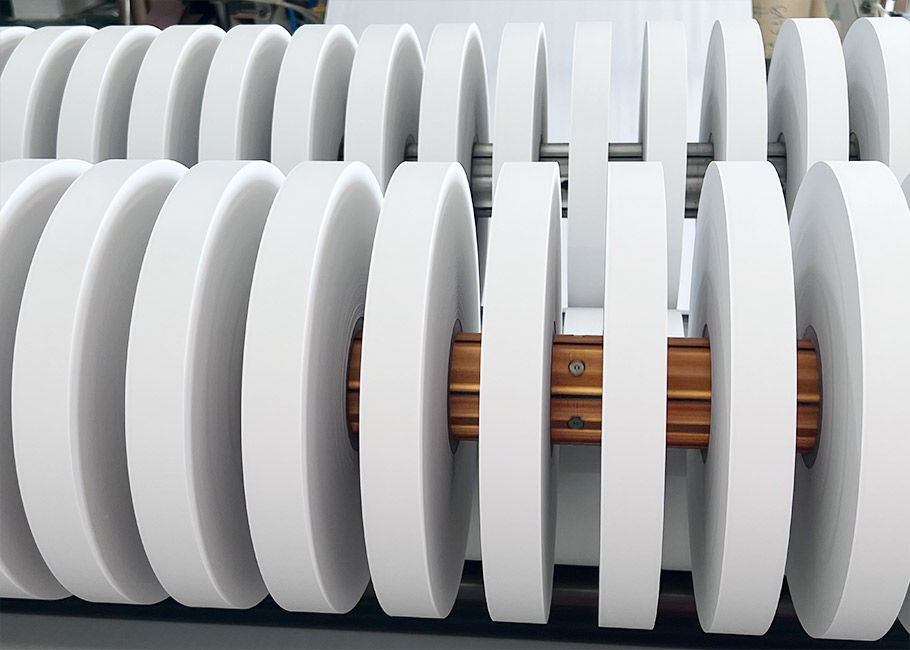
One of the first things that affects price is the quality level of the base paper. In this category, small differences in raw material and paper-making control can lead to big differences in how the roll performs later.
If the paper feels uneven, tears too easily, or loses stability during use, the packaging result becomes harder to control. A lower price may look attractive at the quotation stage, but if the material creates stoppages or waste, buyers usually pay for that later in production.
This is why experienced customers often care more about consistency than about the cheapest offer. In packaging materials, a stable roll is usually worth more than a slightly lower initial price.
Another major pricing factor is specification. The wider the material, the more raw paper is used. The thicker the sheet or the heavier the paper basis, the more cost pressure there is on production and converting.
For B2B buyers, this is where customization starts to matter. Some lines need a specific width to run properly. Some customers need a certain thickness to match their bundling or packaging method. In those cases, pricing is not only about volume. It is also about how closely the roll is matched to the actual application.
This is why custom orders often need a clearer cost discussion from the beginning. The product becomes easier to use, but it also becomes more closely tied to real production requirements.
Some buyers only need a clean plain roll. Others need packaging material that supports branding, a more polished finish, or better presentation in the final use environment.
This is especially relevant when the roll is not only used for internal handling, but also becomes part of the visible package. In these situations, appearance, surface quality, and converting precision all start to affect the selling value of the finished pack.
That is one reason a Packaging Paper roll can vary in price even when the product category sounds similar. One buyer is paying for basic use. Another is paying for a packaging material that also needs to support presentation and consistency.
A paper strapping roll may be competitively priced and still create hidden expense if it does not run well on the line. This is one of the biggest cost issues in industrial buying.
If operators need to stop and adjust the material, if rolls vary too much from batch to batch, or if tension and feed are not stable, the line slows down. Once that happens, the material is no longer cheap in practical terms.
That is why many factory buyers compare suppliers not only on roll price, but also on whether the product behaves consistently over time. Stable line performance is often part of price value, even if it does not show on the quotation sheet.
Like most industrial materials, paper strapping rolls are affected by order quantity. Larger orders often improve cost efficiency because raw material planning, converting, and packaging can be handled more smoothly.
For buyers, this creates an important decision point. Ordering too little may raise the unit price. Ordering too much without a stable usage plan may tie up cash flow and storage space. The best buying decision usually comes from matching order quantity to real packaging rhythm, not only to a price break.
This is why repeat customers often get better overall value than one-time buyers. Predictable volume helps suppliers manage production better, and that usually leads to more stable commercial terms.
Another factor many buyers underestimate is how the rolls are packed and shipped. Packaging that protects the material well may cost more at the beginning, but it can reduce damage, edge problems, and transport loss later.
For export buyers, logistics also matter. Roll dimensions, total shipment volume, pallet structure, and container efficiency all affect the final landed cost. Sometimes the product price itself is not the biggest issue. The real issue is how efficiently it moves through storage and transport.
That is why serious buyers usually look at the total supply picture. A paper roll that seems cheap but creates freight inefficiency may not actually be the better option.
In this category, OEM and ODM usually affect price through specification adjustment rather than dramatic design changes. Buyers may need custom width, thickness, roll length, packaging style, or branding details that fit their own market.
These requests are useful when they solve a real production or sales problem. But they also change the price structure because they influence converting setup, order handling, and sometimes minimum order quantity.
The important part is to keep customization practical. The best OEM or ODM project is usually not the most complex one. It is the one that makes the material easier to use and easier to sell in the target market.
Not every buyer is paying for the same thing, even within the same product category. One customer may need the roll mainly for internal bundling. Another may use it in packaging that affects brand impression. Another may need it for a line where speed and consistency matter more than appearance.
This is why the same type of paper strapping material can be judged very differently from one market to another. In some cases, price sensitivity is the main issue. In others, the buyer is trying to reduce complaints, improve machine fit, or simplify repeat purchasing.
Once the intended use becomes clear, the pricing discussion usually becomes more accurate as well.
The price of paper strapping rolls is affected by much more than raw material alone. Material quality, width, thickness, line compatibility, packaging method, order volume, and customization all play a role. In real B2B purchasing, the best value usually comes from the roll that works reliably in production and stays consistent across repeat orders.
Our Double Offset Paper Roll is a practical option for buyers who want to match packaging needs with stable material performance, not just chase the lowest quote. If you are comparing suppliers or planning a custom order for your packaging process, send us your application details and preferred specifications. We can help you sort through the practical cost factors early and work toward a solution that is easier to run and easier to reorder.