

Custom Parchment Baking Paper Sheets
- Product Information
Parchment Baking Paper Sheets are food-grade baking papers treated with a high-temperature resistant silicone coating, used to separate food from baking pans during the baking process. Unlike ordinary greaseproof paper or wax paper, this product maintains a stable structure at high temperatures, will not melt or release odors, and retains excellent non-stick and greaseproof properties. It is available in pre-cut sheets, with customizable thickness and dimensions, making it suitable for standardized baking processes and large-scale food production.
Parchment Baking Paper Sheets Parameters:
| Material: | Paper |
| Size: | Customizable Width And Thickness According To Customer Requirements |
| OEM: | OEM/ODM Available |
| Packaging: | Carton |
| Factory Nature: | China Manufacturers Suppliers Factory |
Parchment Baking Paper Sheets Features:
1. Non-stick Performance
Parchment Baking Paper Sheets have a uniform silicone oil coating on the surface, with a controllable friction coefficient below 0.25, allowing cookies and pastries to be easily removed after baking at 180 to 220 degrees Celsius, reducing breakage and the need for additional greasing.
2. Heat Resistance and Stability
This product typically withstands temperatures above 230 degrees Celsius. The paper's fiber structure remains stable under continuous high temperatures, resisting brittleness or curling, ensuring consistent shape during baking and making it suitable for continuous batch use.
3. Oil and Grease Resistance
The paper is treated to be oil-resistant, with an oil penetration rate of less than 5%. It effectively prevents butter or vegetable oil from seeping through, keeping baking pans clean, reducing cleaning frequency, and improving efficiency in the kitchen and production line.
4. Paper Thickness
The standard basis weight ranges from 38 to 45 grams per square meter, with uniform thickness control. It resists tearing in high-temperature environments while maintaining good flexibility, making it easy to spread and cut.
5. Food Safety
The product uses food-grade base paper and coating materials, complying with common food contact standards. It contains no fluorescent agents or heavy metal residues and will not transfer harmful substances to food under normal use conditions.
Parchment Baking Paper Sheets Application:
1. Home Baking
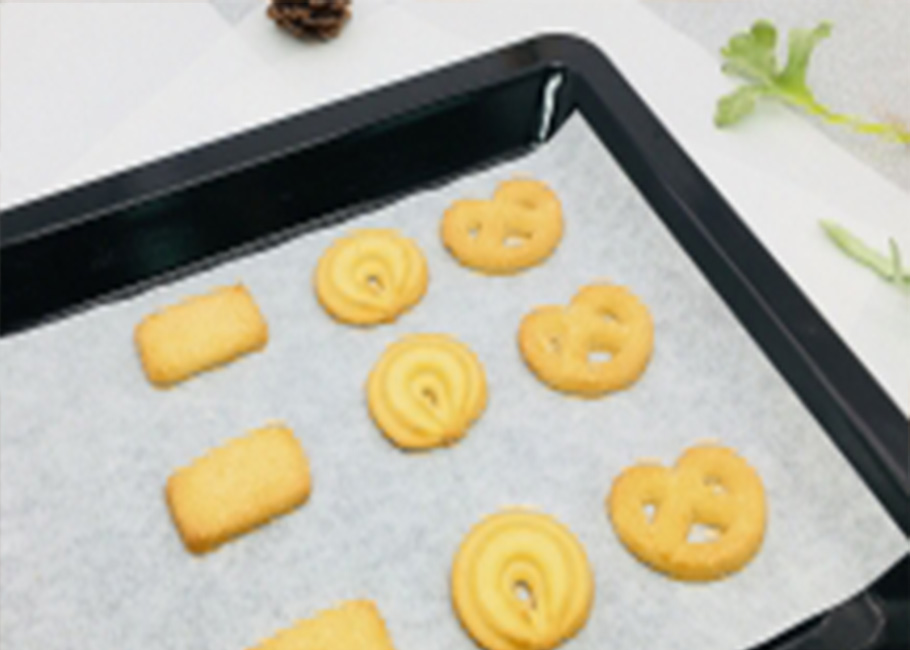
Using Parchment Baking Paper Sheets in a home oven, you can place them directly on the baking sheet for making cookies or biscuits, reducing food sticking and cleaning effort, and improving the efficiency of everyday baking.
2. Commercial Baking
Baking workshops or bakeries can quickly line baking sheets with pre-cut paper, standardizing batch production processes, reducing the need for manual greasing, and ensuring consistent product size and appearance.
3. Food Processing
In the processing of semi-finished food products, these Parchment Baking Paper Sheets can be used during baking or heating steps, preventing direct contact between food and metal equipment and reducing the risk of surface damage.
4. Freezing Preparation
In the pre-processing stage of frozen foods, ingredients can be placed on the paper surface for initial shaping, preventing them from sticking together during freezing and improving subsequent processing efficiency.
Parchment Baking Paper Sheets Maintenance:
1. Storage Environment Control
Parchment Baking Paper Sheets should be stored in a dry, cool environment, away from direct sunlight, high temperatures, and humidity. It is recommended to store baking paper in a sealed plastic bag or cardboard box to prevent it from absorbing moisture and dust from the air. The ideal storage temperature is 15°C to 25°C, with a relative humidity of 40% to 60%. In this environment, baking paper maintains its water- and oil-resistant, high-temperature resistance, and extends its lifespan.
2. Pre-Use Inspection
Before using cooking paper sheets, carefully inspect the appearance and quality of the sheets. Check the surface for tears, scratches, or foreign matter to ensure the integrity and cleanliness of the sheets. If the sheets show even minor damage or stains, do not use them to avoid compromising the cooking results and safety of the food. Also, check the production date and expiration date to ensure that the sheets are within their expiration date and perform at their best.
3. Avoid Excessive Stretching
During use, avoid excessive stretching or folding cooking paper sheets to prevent damage or tearing. Although baking paper is strong and resilient, it still requires care when handling. If cutting or folding the paper, be gentle and avoid applying excessive force.
4. Cleaning and Reusing
If Parchment Baking Paper Sheets are lightly stained or grease-laden, they can be cleaned with a mild detergent and a damp cloth. Lay the sheet flat on a table, dampen a small amount of detergent with a damp cloth, and gently rub the affected area. Rinse thoroughly with clean water and dry. After cleaning, if the baking paper is not damaged or severely deformed, it can be reused for cooking or packaging. However, it is important to use the cleaned paper as soon as possible to avoid prolonged storage, which may cause degradation.
5. Avoid Contact with Sharp Objects
When using and storing Parchment Baking Paper Sheets, avoid contact with sharp objects to prevent scratches or tears. Avoid mixing baking paper with sharp objects such as knives and metal utensils in the kitchen. If cutting the paper, use scissors or a paper cutter and work on a flat surface to avoid scratching the paper. When storing, baking paper should be kept separate from other sharp objects to ensure the integrity of the paper.
Parchment Baking Paper Sheets FAQs:
Q: Can Parchment Baking Paper Sheets be reused?
A: If the paper does not show significant charring or damage during a single baking process, it can be reused for a short period. However, repeated high-temperature cycles will reduce the non-stick effect, and long-term repeated use is not recommended.
Q: Can it be directly exposed to open flames?
A: These Parchment Baking Paper Sheets are suitable for indirect heating environments such as ovens. Direct contact with open flames or heating elements is not recommended to avoid exceeding the heat resistance limit and causing the paper to carbonize.
Q: What is the difference between this and wax paper?
A: Wax paper is not heat-resistant and melts easily, while Parchment Baking Paper Sheets have both heat resistance and non-stick properties, making them more suitable for baking and high-temperature applications.
Q: Will it affect the taste of the food?
A: The paper itself is odorless and will not affect the flavor of food within the normal temperature range, making it suitable for baked goods where taste is important.
Q: Can the size and thickness be customized?
A: Yes, we support customizing the paper size and weight according to customer needs to suit different baking pan specifications and production process requirements.