xinyuanshun@xyspaper.com
+86-13316621858
+86-0750-3766098

Yes, strapping tape can be used for shipping, but it must be used for the right job and applied in the right way. Strapping tape is designed to add external holding force to a package or a bundled load. That makes it useful for shipping when cartons need reinforcement, multiple items must stay together as one unit, or pallet loads must remain stable through handling and vibration. The most important point is that strapping tape is not a replacement for carton sealing tape in every case. Sealing tape closes the box. Strapping tape secures the load. In many shipping programs, the best results come from combining both so the package is closed and structurally stabilized.
At XINYUANSHUN, we supply Paper Strapping solutions built for shipping workflows that require tension stability, clean handling, and customization for different package sizes and load profiles. You can review our product range here: Paper Strapping
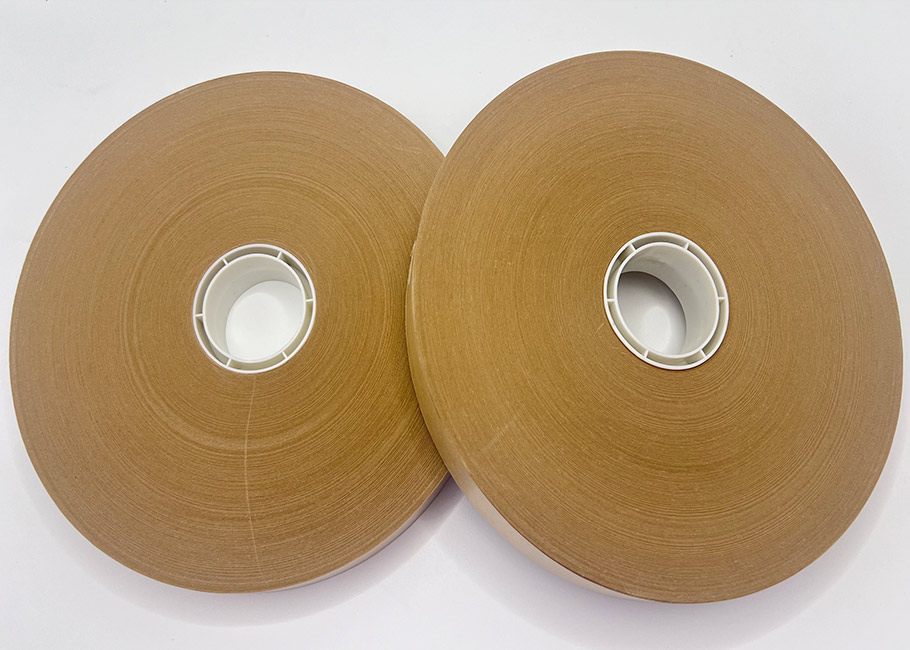
Strapping tape is a strip material used to strap around cartons, bundles, or unit loads to prevent shifting, bulging, and separation during transport. For shipping, it is selected because it can hold tension and resist tearing under movement, stacking pressure, and vibration.
In real shipping operations, strapping tape typically functions as:
A reinforcement layer for cartons that need additional structural stability
A bundling method that keeps multiple cartons or items together as one handling unit
A unit-load stabilization method for pallets, especially when packages are stacked high
A protective holding method when combined with edge protection and corner reinforcement
The shipping value of strapping tape is not the surface adhesion. It is the mechanical holding force produced by tension and stable joint sealing.
Shipping environments impose stress that indoor storage does not. A shipping-ready strapping tape should maintain performance through repeated handling cycles.
Core characteristics that matter include:
Tension retention under vibration
During transport, vibration can loosen poorly applied straps or straps with unstable joints. Good strapping maintains holding force and reduces slack formation.
Tear resistance and durability
Shipping loads experience abrasion on conveyor edges, pallet corners, and carton surfaces. Tear resistance prevents strap breakage.
Reliable sealing or locking
Depending on the strap type and packaging method, the joint must hold without partial separation. Joint reliability is a major determinant of shipping success.
Clean operation and reduced residue
For packaging programs that prioritize clean appearance, paper strapping can integrate well with paper-based cartons and reduce plastic-heavy presentation.
Customizable dimensions
Strap width and thickness should match the load profile. Wider straps distribute pressure and reduce corner damage. Optimized thickness supports stable tension for heavier loads.
Shipping suitability comes from matching these characteristics to the actual distribution route, handling method, and packaging design.
Strapping tape is widely used across logistics and distribution when packages need reinforcement beyond sealing tape.
Cartons can bulge, deform, or lose shape under stacking pressure. Strapping around the carton adds external compression and reduces panel flex, especially for heavier goods or longer transport routes.
Typical use patterns:
One strap around the width to resist bulging
One strap around the length to reduce top flap stress
Multiple straps for heavy cartons or unstable box geometry
When multiple cartons or products must ship together, strapping prevents separation and improves handling efficiency. This is common in mixed-SKU programs, multi-pack kits, and export shipments where unit integrity reduces counting errors and handling time.
Pallet loads can shift during forklift handling, truck vibration, and corner impacts. Strapping can:
Secure cartons to the pallet base
Reduce lateral movement
Maintain a stable stack shape In many cases, strapping is combined with stretch wrap for improved surface containment and improved stability.
Shipping damage often starts at corners. Strapping can be paired with:
Corner tape or edge protectors to prevent strap cutting into cartons
Reinforced corner structures to maintain strap alignment This improves both damage resistance and presentation quality for export shipments.
Shipping application map
| Shipping Scenario | Main Risk | How Strapping Tape Helps |
|---|---|---|
| Heavy carton shipment | Bulging and deformation | Adds external compression and stability |
| Multi-carton bundles | Separation in handling | Keeps items as one unit load |
| Pallet distribution | Stack shifting and collapse | Stabilizes load during movement |
| Export logistics | Long vibration cycles | Improves tension retention and integrity |
| Corner-sensitive packaging | Edge crushing and strap cutting | Works with corner protection to reduce damage |
Correct application determines whether strapping tape improves shipping stability or becomes a weak point.
Strap around the shortest dimension of a carton to control bulging
This is effective when box panels are flexing outward.
Strap around the longest dimension to support flap stability
This reduces lid separation risk when cartons are stacked.
For pallets, strap through the pallet base if possible
This creates a true unit load that moves as one system.
Tension must be high enough to prevent movement but not high enough to crush carton corners or deform the product inside.
Practical guidance:
Use a wider strap for heavier loads to reduce pressure concentration
Use corner protection if cartons are thin-walled or products are fragile
Apply tension consistently across operators to prevent performance variability
Joint failure is one of the most common shipping strapping issues. Verify:
The seal is complete and aligned
No contamination is present at the sealing interface
The strap is not twisted at the joint
The strap lies flat against the carton surface
A simple pull test on the joint area is a practical quality check for shipping programs.
Common errors that reduce shipping performance:
Using strapping as the only carton closure method
Strapping supports the box but does not always seal flaps reliably.
Over-tensioning and corner crushing
This can weaken cartons and lead to collapse under stacking.
Skipping edge protection on sharp corners
Straps may cut into edges and lose tension.
Inconsistent strap placement
Misaligned straps can slide during vibration and lose holding force.
Shipping programs vary by product category, distribution distance, and handling method. A selection process should match strap capability to load realities.
Selection checklist:
Load weight and carton strength
Heavier loads require stronger holding force and more stable joint performance.
Shipping route intensity
Longer routes with more transfers typically require more reinforcement.
Environmental exposure risk
If humidity exposure is expected, confirm material suitability and sealing stability.
Automation level
Manual, semi-automatic, and automatic systems require different strap formats and tolerances.
Packaging appearance requirements
Paper strapping can support a clean, consistent presentation for many packaging programs.
At XINYUANSHUN, we provide paper strapping products designed for shipping and bundling workflows, with OEM and ODM support to match strap width and thickness to your packaging and load profile. You can explore options here: Paper Strapping
Strapping tape can be used for shipping when the goal is to reinforce cartons, bundle multiple packages, or stabilize pallet loads against vibration and handling stress. It is most effective when it is used as a load-holding and reinforcement tool rather than a direct replacement for carton sealing tape. The best shipping outcomes come from choosing the right strap dimensions, applying consistent tension, using edge protection when needed, and verifying joint quality to prevent slack and breakage during transit.
If you are planning a shipping program and want guidance on strapping layout, strap width and thickness, sealing method selection, or how to reduce carton damage in transit, you can consult XINYUANSHUN. Share your carton size, load weight range, shipping route type, and packaging line method, and we will recommend suitable paper strapping options and provide practical support for improving your shipping stability.