xinyuanshun@xyspaper.com
+86-13316621858
+86-0750-3766098

Heavy-duty packaging is rarely challenged by a single factor. In real logistics, materials face combined stress from compression, vibration, sharp edges, moisture, dust, temperature swings, and repeated handling. When ordinary paper fails, the failure is usually predictable: tearing at corners, softening after humidity exposure, scuffing that compromises appearance, or weak barrier performance that allows contamination and product abrasion. Laminated paper is widely used for heavy-duty packaging because it solves these issues in a balanced way, delivering both structural strength and stable protection without sacrificing converting efficiency.
For buyers sourcing reliable roll stock that can handle demanding packaging lines and shipping conditions, XINYUANSHUN provides Laminated Paper Rolls designed for industrial and packaging use cases. You can review specifications and options here: laminated paper roll
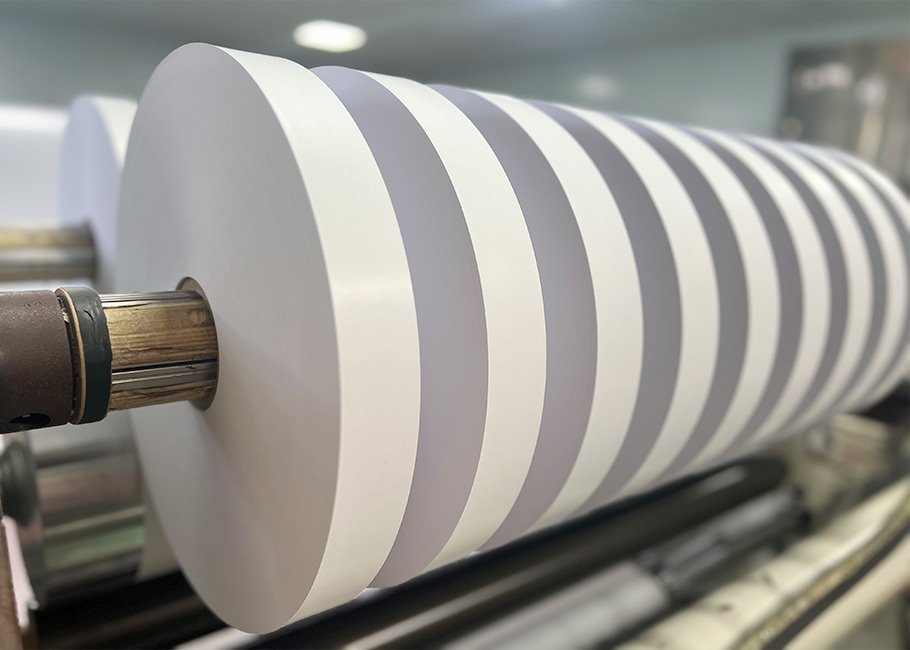
In heavy-duty packaging, paper is not only a wrapper; it becomes a functional protective layer. Standard paper often struggles in four typical failure points:
Edge tearing and puncture: cartons, hardware components, and stacked goods create concentrated stress at corners and contact points
Moisture-triggered loss of stiffness: humidity during warehousing or container shipping reduces paper strength and causes deformation
Surface abrasion: friction during transport leads to scuffing, dusting, or fiber shedding that can contaminate packed products
Barrier weakness: without a stable barrier, paper alone cannot reliably prevent moisture ingress or isolate the product from external exposure
Laminated paper addresses these failure modes by combining a paper base with a protective laminated layer, enabling stronger mechanical performance and more consistent resistance to harsh storage and transport conditions.
Laminated paper is engineered as a composite material, typically built around a paper plus PE structure for industrial packaging. The paper provides stiffness and printability, while the PE layer contributes barrier and surface protection. For heavy-duty packaging, the value is not simply having an added layer, but how the structure behaves under stress:
Load distribution: the laminated layer helps spread localized stress, reducing tear initiation
Moisture isolation: the barrier layer reduces water vapor and liquid contact effects that weaken paper fibers
Surface stability: the laminated surface improves smoothness and reduces friction-related damage and dusting
Product separation: a consistent barrier layer helps prevent direct contact abrasion, which is critical for components with sensitive finishes
XINYUANSHUN laminated paper rolls are produced for packaging scenarios where users prioritize strong tensile performance, high strength, waterproof and moisture-resistant behavior, and a smooth surface. This combination is especially practical for heavy-duty packaging where damage cost is higher than material cost.
Laminated paper is often selected because it improves multiple performance dimensions at the same time. Instead of optimizing one property and sacrificing another, it supports a more balanced packaging system.
Heavy-duty packaging is frequently pulled, tightened, and shifted during manual handling and machine converting. Laminated paper improves integrity during these actions by enhancing resistance to tearing and sudden stress. This reduces rework, rejects, and the hidden costs of damaged wraps or compromised bundles during packing.
Ocean shipping, cross-border warehousing, and container transitions commonly expose packaging to humidity and condensation. Paper alone can soften, wrinkle, or lose stiffness. A laminated barrier helps keep packaging performance stable across variable environments, protecting not only the outer wrap but also the inner product from moisture-related risk.
Surface smoothness affects more than feel. In high-throughput operations, a smoother surface reduces friction, lowers the chance of scuffing, and helps consistent feeding and wrapping. For products that require clean presentation, surface stability also reduces visible wear during transport and storage.
In industrial packaging, isolation is often the difference between acceptable and defective goods. Laminated paper can function as a protective separation layer, reducing abrasion, preventing dust transfer, and supporting stable protection for sensitive finishes or coated surfaces.
If you need a roll material that can serve as both packaging substrate and protective barrier in demanding industrial workflows, XINYUANSHUN options are available here: laminated paper roll
Laminated paper is not only used for one niche. Its value becomes clear in industries where products are dense, edges are sharp, or surface protection is critical. Typical scenarios include:
Battery-related packaging: packaged units may be heavy and sensitive to moisture exposure, while logistics cycles can be long
Charger and electronics accessories: surface scuffing, dust, and moisture risk can affect appearance and product condition
Hardware and metal components: sharp edges and irregular shapes increase puncture and tear risk during wrapping and stacking
Printing and packaging operations: laminated paper is often chosen for stable processing performance and consistent surface behavior
General industrial protective wrapping: any scenario where the wrapper must provide both strength and barrier isolation benefits from laminated structure design
These are the kinds of environments where buyers care less about a single lab metric and more about how material performs across loading, vibration, stacking, and climate variation.
Choosing laminated paper for heavy-duty packaging should start with operational requirements, not only material naming. Below are practical factors buyers use when writing specifications.
Packaging lines vary widely in roll width, tension settings, and wrap format. Material that is too thin may tear, while overly thick material can cause poor folding behavior or feeding issues. The most efficient approach is to specify width and thickness based on your equipment and packaging geometry.
XINYUANSHUN supports customization so buyers can specify roll width and thickness to customer requirements, helping ensure stable converting and consistent packaging performance.
If the product will experience high humidity, refrigerated logistics, or condensation risk, barrier needs should be treated as functional requirements. Laminated structures are often chosen because they keep packaging stable and reduce moisture-driven failures.
Some goods are more sensitive to scuffing, abrasion, or contamination. A smoother laminated surface helps reduce these risks, especially when items are repeatedly handled, stacked, and transported.
Heavy-duty packaging may involve bundling, carton liners, protective interleaving, or wrap-around. Laminated paper is flexible enough to support multiple packaging roles, but specifying the role helps ensure the correct balance of stiffness, barrier, and surface properties.
The table below summarizes why laminated paper is often chosen when packaging demands are high and failure cost is significant.
| Evaluation point | Standard paper | Laminated paper roll | Common outcome in heavy-duty use |
|---|---|---|---|
| Tear resistance under pulling and stacking | Medium to low | High | Laminated paper reduces tearing and corner failure |
| Moisture tolerance during shipping and warehousing | Low to medium | High | Laminated barrier helps maintain stiffness and integrity |
| Surface scuff resistance and dust control | Medium | High | Laminated surface reduces abrasion and fiber shedding |
| Product isolation and protective separation | Limited | Strong | Better protection for sensitive finishes and coated parts |
| Converting stability on packaging lines | Varies | More stable when specified correctly | Reduced jams, fewer rejects, better process consistency |
| Suitability for long logistics cycles | Often limited | Strong | Better stability across climate variation and handling |
For buyers who need a material that can manage both mechanical stress and environmental exposure, laminated paper is often the more dependable choice, especially when roll specs are matched to the packaging process.
Heavy-duty packaging requires more than a generic material description. Buyers typically want consistent performance, specification control, and supply reliability. XINYUANSHUN supports these priorities with practical manufacturing and service capabilities aligned to laminated paper procurement needs:
Paper plus PE structure for demanding use
Designed for strong tensile behavior, high strength, waterproof and moisture-resistant performance, and stable surface smoothness.
Customization for roll width and thickness
Specifications can be produced according to customer requirements, supporting different packaging formats and converting equipment.
OEM and ODM support
Suitable for buyers who need tailored material solutions for different products, markets, and packaging workflows.
Export-ready packaging
Carton packing supports safe transport and better protection during international shipping and warehousing.
Industry-relevant applications
Commonly used in packaging workflows across electronics-related products, hardware components, and printing packaging operations where barrier protection and durability matter.
You can view XINYUANSHUN laminated paper roll options here: laminated paper roll
Laminated paper is widely considered one of the best materials for heavy-duty packaging because it delivers a practical combination of strength, moisture resistance, smooth surface stability, and barrier isolation. These characteristics reduce common packaging failures such as tearing, softening under humidity, and surface abrasion during transport. In demanding supply chains, the best packaging material is the one that protects products consistently from packing line to final delivery.
If your packaging must withstand long logistics cycles, high handling stress, and moisture exposure, XINYUANSHUN laminated paper rolls provide a dependable solution with customizable specifications and export-ready supply capability. Learn more here: laminated paper roll