xinyuanshun@xyspaper.com
+86-13316621858
+86-0750-3766098

Choosing the right strapping tape width is not simply a packaging detail. Width directly affects how tension is distributed, how cartons respond under pressure, and how reliably the strap performs during sealing, handling, storage, and transport. A strap that is too narrow may cut into cartons or shift during movement, while an overly wide strap can increase cost without delivering proportional performance benefits.
In paper-based packaging systems, Paper Strapping is increasingly selected as a practical alternative to plastic straps. It offers strong pulling performance, safer handling, and easier waste management while still meeting the stability requirements of many packaging scenarios. XINYUANSHUN provides paper strapping with customizable width and thickness, good heat sealing performance, and stable material consistency to support different load conditions.
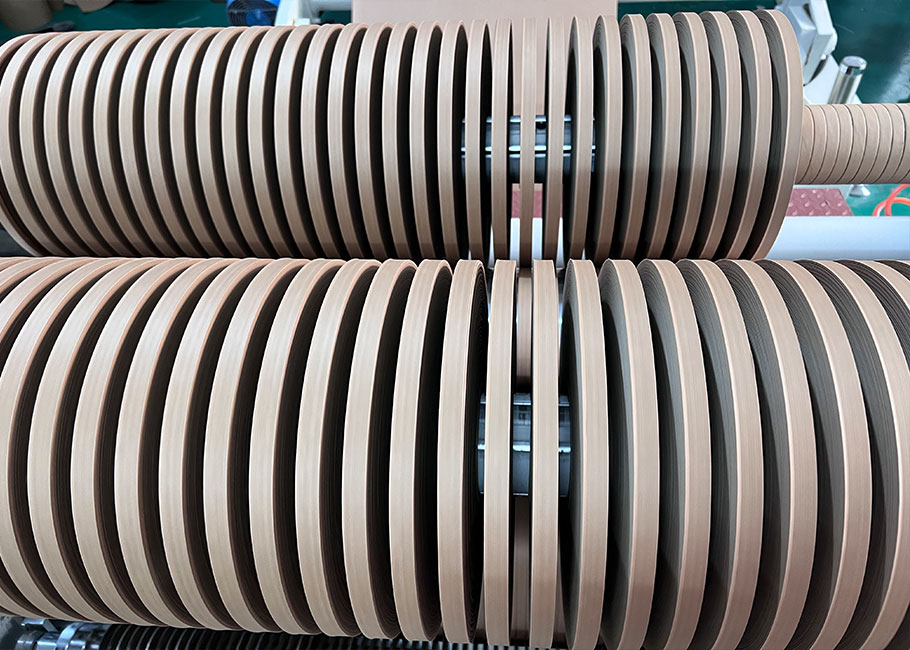
Strapping width determines how force is transferred from the strap to the load surface. Narrow straps concentrate pressure along a smaller contact area, which can increase the risk of carton indentation, edge crush, or surface marking. Wider straps distribute tension more evenly, helping cartons maintain shape and appearance under stress.
Width also affects strap stability during movement. On smooth carton surfaces, very narrow straps are more likely to shift position when loads experience vibration or sudden stops. Wider paper strapping generally maintains better contact with the load surface, improving overall stability during handling and transport.
From a process perspective, strap width influences sealing behavior. The sealing zone, pressure distribution, and alignment tolerance all depend on how well strap width matches the machine configuration. Stable width selection helps improve seal consistency and reduces production variability.
Load shape often matters more than total weight. Rigid cartons with strong edges may tolerate narrower paper strapping, while softer cartons or recycled corrugated materials usually benefit from wider straps to reduce localized compression.
Smooth or coated carton surfaces can also affect strap behavior. Wider strapping provides more surface contact, which helps reduce slipping and maintains strap position during handling.
Loads that move through conveyors, pallet stacking, and forklift transport experience repeated micro-movements. In these environments, wider paper strapping tends to resist shifting and reduces friction damage at carton edges.
For loads handled manually or moved over short distances, narrower widths may be sufficient when cartons are structurally strong and well-aligned.
Straps apply continuous tension during storage. Over time, narrow straps may leave visible impressions or slowly deform carton surfaces, especially when loads are stacked. Wider strapping reduces surface pressure and helps preserve carton integrity during longer storage cycles.
Although exact specifications depend on machine setup and carton quality, general width tendencies can be observed across packaging operations.
| Load condition | Common width tendency | Practical benefit |
|---|---|---|
| Light cartons and internal bundling | Narrow to mid-width | Efficient use of material with sufficient holding force |
| Medium-weight stacked cartons | Mid-width | Balanced pressure distribution and reduced edge damage |
| Heavy cartons or tall stacks | Wider width | Improved load stability and reduced carton deformation |
| Retail-facing or printed cartons | Wider width | Lower risk of surface marking and improved appearance |
| Soft or compressible bundles | Wider width | Reduced cut-in and better shape retention |
Width selection works best when combined with appropriate strap thickness and consistent material structure.
Not always. Load weight is an important factor, but carton strength and stacking geometry often play an equally important role. A strong, double-wall carton may perform well with mid-width paper strapping, while a lighter carton made from recycled fiber may need a wider strap even at lower weights to avoid damage.
This typically occurs when narrow strapping concentrates pressure in a small area. During storage or transport, the strap compresses carton fibers and leaves visible impressions. Increasing strap width helps spread the load and significantly reduces surface marking.
Strap width influences how evenly heat and pressure are applied during sealing. Wider paper strapping offers a larger seal interface, which can improve seal consistency when machine alignment is correct. Narrower straps require tighter control of tracking and pressure to achieve the same sealing reliability.
Wider strapping generally improves pressure distribution, but it must still match the sealing head and machine design. If the strap width exceeds the effective sealing zone, seal strength may decrease. This is why customizable width and thickness are important when selecting paper strapping.
Some packaging lines successfully standardize on a single width, but many achieve better results by using two widths. Narrower strapping is often used for light internal bundling, while wider strapping is reserved for heavier loads, longer transport cycles, or appearance-sensitive packaging.
In automated packaging lines, width consistency is essential. Even small variations can affect strap tracking, seal alignment, and tension distribution. Paper strapping must be produced with controlled dimensions to ensure predictable sealing behavior.
XINYUANSHUN paper strapping is designed with stable structure and good heat sealing performance. Customizable width and thickness allow packaging teams to fine-tune strapping specifications based on real production feedback without changing equipment.
XINYUANSHUN paper strapping is developed for packaging operations that require flexibility and consistency.
Key advantages include:
Paper material suitable for paper-based packaging systems
Strong pulling performance for reliable bundling
Good heat sealing performance for stable sealing results
Customizable width and thickness to match load and machine requirements
OEM and ODM support for distributors and packaging solution providers
Paper carton packaging for safer transport and storage
These features help buyers reduce trial costs and maintain consistent strapping performance across different products and load conditions.
The right strapping tape width depends on more than load weight alone. Carton strength, surface condition, stacking height, transport intensity, storage time, and sealing equipment all influence how a strap performs in real use. In many packaging systems, paper strapping offers a balanced solution that combines reliable load stability with safer handling and simplified disposal.
By selecting appropriate width specifications and working with a supplier that supports customization and stable production, packaging teams can achieve consistent results across a wide range of load scenarios. XINYUANSHUN paper strapping provides the flexibility and performance needed to make width selection a controlled and confident decision rather than a recurring packaging issue.