xinyuanshun@xyspaper.com
+86-13316621858
+86-0750-3766098

opp film is one of the most commonly used materials in modern packaging. Its clarity, strength, and versatility make it ideal for applications ranging from food packaging to industrial wrapping and protective layers. The term “OPP” refers to Oriented Polypropylene, a polymer film stretched in one or two directions to improve tensile strength, stiffness, and optical clarity. Because of these enhanced properties, OPP film has become an essential component in industries requiring lightweight yet durable packaging solutions. As manufacturers continue shifting toward environmentally responsible materials, many businesses now choose eco-friendly OPP films, such as XINYUANSHUN’s eco-friendly OPP film designed for recyclable and high-performance applications.
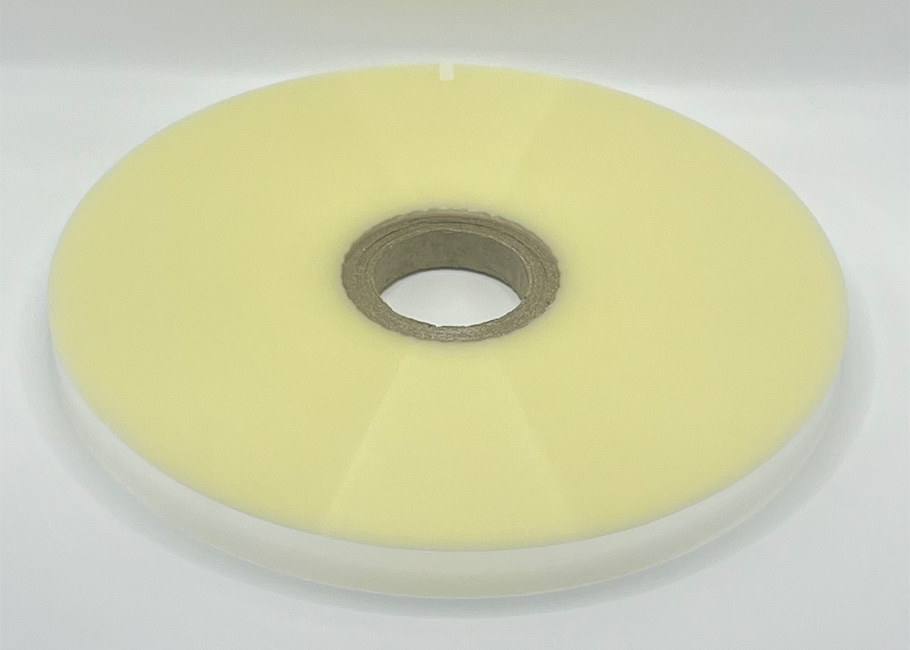
The production of OPP film involves a precise sequence of extrusion, stretching, and heat-setting. Polypropylene resin is melted and extruded into a thin sheet before undergoing mechanical stretching. This stretching can be uniaxial (one direction) or biaxial (both directions), each method influencing the mechanical behavior of the final film. Biaxial-oriented polypropylene generally offers higher clarity and uniform strength, making it preferred for packaging products that require visual appeal and durability.
Manufacturers use controlled stretching ratios and temperature management to adjust thickness, gloss, and flexibility. The production process determines whether the film is suitable for printing, lamination, heat sealing, or protective wrapping. XINYUANSHUN’s eco-friendly OPP film is engineered through refined manufacturing parameters to achieve stable mechanical properties while supporting sustainable packaging goals.
OPP film is valued for its combination of optical and mechanical characteristics. It is lightweight yet strong, enabling reduced packaging weight without sacrificing performance. The material naturally offers high transparency, making it suitable for branding, product visibility, and high-quality printing.
It also has excellent barrier properties against moisture and contaminants, preserving product quality during storage and transport. Many industries rely on these traits to maintain freshness, protect surfaces, and reduce packaging-related failures. OPP film’s favorable chemical resistance further supports its use in diverse environments.
Below is a summary of typical advantages:
| Property | Description |
|---|---|
| Transparency | High clarity for visible packaging |
| Strength | Strong tensile resistance due to orientation |
| Moisture Barrier | Protects against humidity and vapor |
| Printability | Suitable for multi-color printing |
| Sustainability | Lightweight and recyclable |
| Chemical Resistance | Stable when exposed to oils and solvents |
These characteristics explain why OPP film is considered a versatile, reliable material for both consumer products and industrial processes.
OPP film integrates into countless packaging formats across multiple industries. It is frequently used for food packaging because it maintains freshness while allowing customers to see the contents. Snack bags, bakery wraps, candy packaging, and produce coverings often rely on OPP film for strength and clarity.
In non-food sectors, OPP film is applied as overwrap for cosmetics, pharmaceuticals, and household goods. It also functions as a protective release layer, laminated film, label stock, and industrial wrapping material that shields surfaces during transport.
As companies pursue sustainability, eco-friendly OPP materials have gained traction. XINYUANSHUN supports this transition with eco-friendly OPP film that reduces environmental impact while maintaining high performance.
Food & beverage
Cosmetics & personal care
Household products
Logistics & transport
Industrial protective packaging
Printing & labeling
E-commerce packaging
Each sector values OPP film for its balance of economy, durability, and functional performance.
OPP film is recyclable, lightweight, and energy-efficient to produce, making it a more environmentally responsible option than many traditional packaging materials. Because it requires fewer resources while delivering strong performance, it helps reduce total material usage and waste generation. Compared with multilayer composites that cannot be recycled easily, mono-material OPP formats support circular packaging strategies.
XINYUANSHUN prioritizes this direction with products like our eco-friendly OPP film, designed to help customers meet regulatory standards and sustainability targets without compromising packaging quality.
Understanding how OPP film compares to other materials helps businesses choose the right option for their products. The table below outlines key differences:
| Film Type | Strength | Transparency | Recyclability | Heat Sealability | Typical Use |
|---|---|---|---|---|---|
| OPP Film | High | Excellent | High | Requires coating or lamination | Food wraps, labels |
| BOPP Film | Very high | Excellent | High | Good | Snack bags, lamination |
| pet film | Very high | High | Medium | Excellent | High-strength packaging |
| PVC Film | Medium | Medium | Low | Good | Shrink wrap |
| PE Film | Medium | Medium | High | Very good | General packaging |
OPP film offers an ideal balance for many applications: strong, economical, printable, and widely recyclable.
Modern supply chains require materials that support branding, protection, sustainability, and efficient processing. OPP film fits naturally into these requirements. It handles ink adhesion for vivid printing, supports coating and lamination structures, and withstands mechanical stress during transportation.
Its lightweight nature also reduces shipping costs, a significant advantage for logistics and e-commerce. As global markets demand environmentally responsible packaging, materials such as XINYUANSHUN’s eco-friendly OPP film allow businesses to align product packaging with sustainability commitments.
OPP film is widely preferred for printing because of its smooth surface and excellent ink retention properties. Rotogravure, flexographic, and digital printing methods all perform well on OPP substrates. When laminated, OPP film enhances mechanical strength, barrier performance, and surface finishing.
Coated OPP films can include matte, glossy, anti-fog, anti-static, and heat-sealable surfaces, each tailored to specific packaging needs. The adaptability of OPP film makes it ideal for brand display and protective applications.
Many companies now seek packaging materials that reduce environmental impact while preserving product presentation and integrity. Eco-friendly OPP film addresses this need by being recyclable, compliant with regulatory standards, and optimized for high-volume manufacturing.
XINYUANSHUN’s eco-friendly OPP film is developed with strict material selection, consistent thickness control, and advanced production processes that enhance durability and sustainability. It supports customers across food packaging, industrial production, and consumer goods industries.
OPP film is a versatile, durable, and visually appealing packaging material used across global industries. Its orientation process enhances strength and clarity, making it suitable for printing, lamination, and protective wrapping. As sustainability becomes essential, recyclable OPP film stands out as a responsible packaging solution.
Businesses benefit from its lightweight structure, operational efficiency, and broad compatibility with diverse applications. XINYUANSHUN supports this evolution with high-performance, environmentally friendly materials such as our eco-friendly OPP film, ensuring customers receive packaging solutions that align with both performance expectations and environmental goals.