xinyuanshun@xyspaper.com
+86-13316621858
+86-0750-3766098

Double offset paper is a wood pulp based printing and Packaging Paper known for its clean surface, stable print performance, and broad commercial use. It is often chosen when buyers need paper that can handle clear text, balanced ink absorption, and dependable converting performance in roll form. In practical sourcing, this matters because many buyers are not only looking for paper. They are looking for a material that runs smoothly in printing, stays consistent during storage, and fits different downstream uses. That is why a Double Offset Paper Roll connects directly to this topic. It offers the kind of printability, smoothness, and dimensional stability that many converters, printers, and packaging buyers need in day-to-day production.
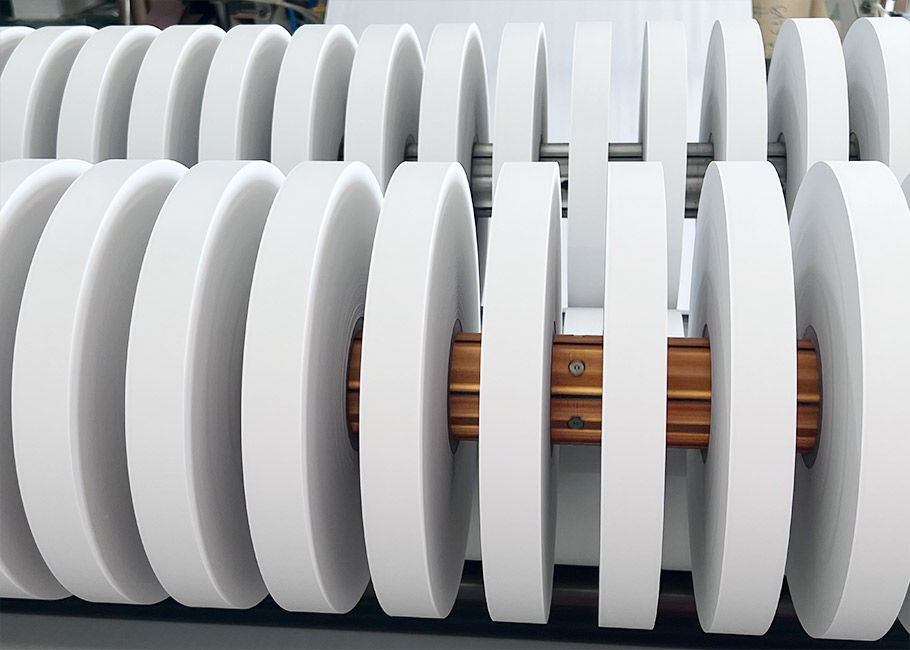
The term double offset paper is commonly used for uncoated paper made from chemical wood pulp and intended for offset or related printing applications. It is valued for having a relatively smooth surface, good opacity, and a stable structure that supports readable printing and writing results. In roll form, it is also easier to integrate into different converting and production lines, especially for buyers who need flexible sizing and continuous processing rather than only sheet-based supply.
From a commercial point of view, double offset paper sits in a very practical part of the market. It is not a highly decorative specialty paper, and it is not just a low-end utility paper either. It is widely used because it balances print clarity, handling convenience, and cost control. For many B2B buyers, that balance is exactly the reason it stays relevant.
The main reason is consistency. In printing and packaging work, inconsistency creates waste quickly. If paper absorbs ink unevenly, curls under humidity changes, or breaks too easily during converting, the cost does not stop at the paper itself. It affects machine efficiency, print appearance, and delivery schedules. Double offset paper is often chosen because it offers a more reliable middle ground for applications that need clear output and steady processing.
This product category is usually associated with a thickness range of about 0.08 mm to 0.15 mm and a grammage range of roughly 70 to 120 g/m², which makes it suitable for a wide variety of printing and packaging uses. It is also described with relatively strong tensile performance, including a transverse tensile index above 45 Nm/g and a longitudinal tensile index above 55 Nm/g, which helps explain why it is easier to run through production without frequent breakage.
One of the biggest advantages of double offset paper is how it handles print. Buyers in this category usually care about more than whether ink can sit on the sheet. They care about whether the result stays sharp, whether the surface handles repeated runs well, and whether the paper supports stable production quality across batches.
This Double Offset Paper Roll is described as having moderate ink absorption in the range of about 1.5 to 2.5 g/m², which supports reasonably fast and even ink acceptance without excessive bleed-through. Its surface smoothness is also listed at about 100 to 200 seconds under the Bekk smoothness method, which helps explain why printed text and graphics can look cleaner and more controlled. Whiteness is given at around 85% to 90%, while opacity is described as generally above 90%, both of which support better readability and visual presentation in many print uses.
For B2B buyers, these details matter because poor print behavior often turns into production complaints. A paper that looks acceptable on a sample sheet but performs inconsistently during actual runs can create real losses. That is why print stability is often more important than a simple low price.
Another reason buyers ask what double offset paper is, especially in industrial sourcing, is that they are trying to understand whether it will stay stable in their environment. Paper is affected by humidity, storage conditions, tension, folding, and machine speed. A paper that changes too much under normal conditions can create downstream problems in printing, cutting, binding, or packaging.
This product is described as having good dimensional stability, with longitudinal expansion generally around 0.1% to 0.2% and transverse expansion around 0.2% to 0.3% when stored in an environment of about 20 to 25 degrees Celsius and 40% to 60% relative humidity. That type of stability is useful for buyers who need paper that will not shift too much during storage or production. The paper is also described as flexible enough for folding work without cracking easily, which adds to its value in converting and finishing processes.
Double offset paper is not only about print and strength. Its chemical stability also affects long-term usability. This category is described with a pH of around 7 to 8, which means it is weakly alkaline and relatively stable under normal storage and use conditions. That helps reduce problems such as early discoloration or yellowing. It is also presented as compatible with common office and printing chemicals such as inks and adhesives, which makes it more practical for routine commercial use.
For buyers, this translates into fewer surprises. A more chemically stable paper is easier to position in applications where appearance and readability need to remain acceptable over time. It is also more suitable when the paper may pass through multiple processing steps before reaching the end user.
Double offset paper is widely used across printing, office, education, commercial documentation, and some packaging-related applications. Common examples include books, magazines, brochures, reports, forms, labels, educational materials, and selected product packaging inserts or manuals. In roll form, it is especially useful for buyers who want production flexibility and customized width or thickness rather than a fixed standard format.
That flexibility is a real advantage in B2B sourcing. Some buyers need paper for general commercial printing. Others need it for office-use stock, teaching materials, or converted packaging-related items. A double offset paper roll with customizable width and thickness is easier to integrate into different business models because it supports more than one end use.
When evaluating double offset paper, experienced buyers usually go beyond the product name. They look at grammage, thickness, print behavior, tensile strength, dimensional stability, and whether the supplier can support the format they actually need. Width and thickness customization matter because paper that performs well in theory can still be a poor fit if it does not match the real production line.
This product line specifically notes that material width and thickness can be customized according to customer requirements, and that OEM and ODM service is available. For wholesale buyers, converters, and project-based purchasers, that is useful because paper sourcing is often tied to machine setup, finished product size, and workflow efficiency rather than only to raw material price.
So, what is double offset paper? It is a practical, wood pulp based printing and packaging paper valued for clear print performance, good surface smoothness, stable dimensions, and broad application flexibility. In roll form, it becomes even more useful for buyers who need easier converting, customized sizing, and dependable production behavior. That is why a double offset paper roll continues to be a strong option for printing, office, education, and selected packaging uses.
If you are comparing double offset paper options for your printing or packaging business and want to review grammage, width, thickness, or application fit more closely, feel free to contact us. We can help you evaluate a more suitable solution based on your production process and market needs.
Previous: What Temperature Does Packaging Tape Melt?
Next: What Is Anti Rust Paper?