xinyuanshun@xyspaper.com
+86-13316621858
+86-0750-3766098

A battery separator is easy to overlook because it is thin, hidden, and not the part people usually talk about first. But in a lithium-ion battery, it is one of the components that decides whether the cell can work safely and consistently. A separator sits between the cathode and anode, keeping them apart while still allowing lithium ions to move through the electrolyte during charging and discharging. That is exactly why the Li-ion battery separator matters so much in real battery design. Without it, the two electrodes could touch directly, causing an internal short circuit instead of controlled energy flow.
When people hear the word separator, they often think its only job is to divide two parts. In a battery, the role is more demanding than that. The separator must block electronic contact between the positive and negative electrodes, but at the same time it must let lithium ions pass through efficiently. That means it works as both a safety barrier and an ion transport channel. If it only blocked contact and failed to support ion movement, the battery would not cycle properly. If it allowed contact between electrodes, the cell could fail in a much more serious way.
This balance is one reason separators are such a critical part of lithium-ion battery engineering. Their structure affects cycle life, safety, power capability, and energy density. In other words, the separator is not just there to “separate.” It helps shape how the whole battery performs over time.
The most direct reason a battery requires a separator is to prevent the positive and negative electrodes from touching each other. In lithium-ion batteries, direct physical contact between electrodes can trigger an internal short circuit, which can quickly lead to overheating and, in severe cases, fire or thermal runaway. That is why separator failure is treated as a major safety issue in battery design.
For B2B buyers, this is not an abstract technical point. If the separator is weak, unstable, or easily damaged, the risks do not stay inside the lab. They show up later in cell reliability, pack safety, warranty exposure, and product qualification pressure. A battery can have advanced active materials, but if the separator cannot maintain safe isolation under real operating conditions, the whole cell design becomes harder to trust.
A separator is not a solid wall. It is usually a microporous membrane, and those pores are essential because they hold electrolyte and create pathways for lithium ions to move between electrodes. Commercial lithium-ion separators are commonly made from polypropylene and polyethylene, precisely because these materials can provide the combination of insulation, chemical stability, porosity, and processability that battery cells need.
The pore structure matters more than many buyers first expect. Pore sizes commonly ranging from about 10 nm to 500 nm, with porosity often around 40% to 74%. Those numbers matter because the separator has to support ion flow without sacrificing mechanical integrity. If porosity is too low, ion transport becomes more restricted. If the structure is too weak, safety and dimensional stability become harder to maintain.
In battery production and use, separators are exposed to more than chemistry. They also face tension, compression, puncture risk, and internal stress from the electrodes. That is why separator strength is not just a material spec on paper. It directly affects whether the membrane can survive assembly and repeated charge-discharge cycles. Reviews on lithium-ion battery separators consistently point out the need for strong mechanical performance, especially as cells move toward higher energy density and harsher operating conditions.
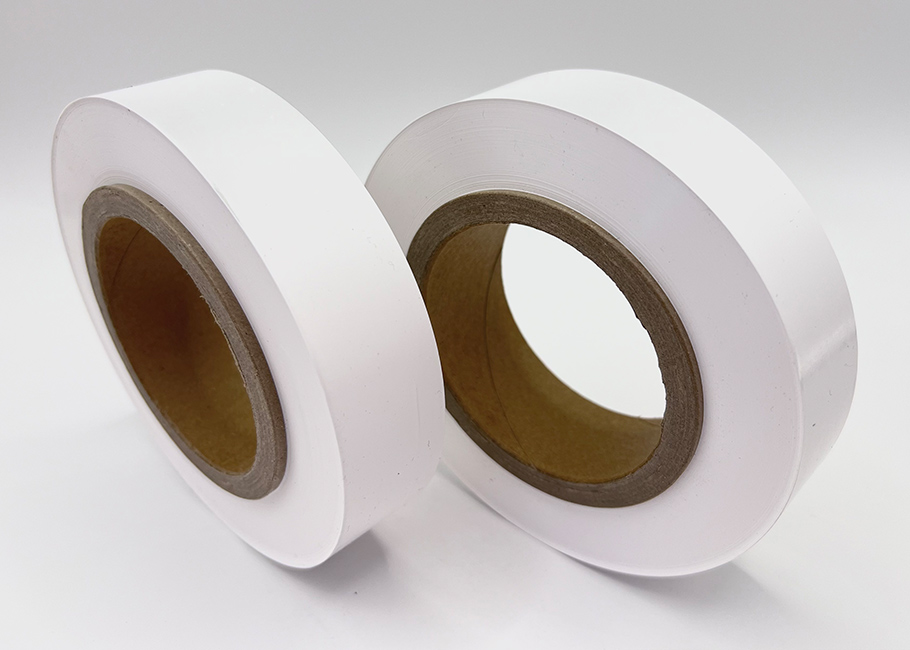
This Li-ion battery separator highlights that kind of requirement clearly. resistance above 10¹⁶ Ω·cm, puncture strength above 0.5 N/μm, and tensile strength around 30 MPa in the longitudinal direction and 20 MPa in the transverse direction. For buyers, these are not just technical numbers. They indicate how the separator is expected to resist direct conduction, withstand local stress, and maintain its structure during processing and use.
A separator does not only need to work under normal conditions. It also has to remain stable when temperatures rise. One of the key concerns in lithium-ion safety is that separators can shrink, puncture, or melt under abusive conditions, which may allow the electrodes to touch and trigger internal short circuits. Some separator systems are designed with shutdown behavior, where pore closure at elevated temperature helps slow ion transport and reduce the chance of escalation.
That is why separator selection becomes especially important in applications like electric vehicles, energy storage systems, and high-demand electronics. A separator that performs well only under mild conditions may not be enough for cells expected to handle thermal stress, long cycling, or variable environments. From a sourcing perspective, this is one of the reasons buyers increasingly look beyond price and ask more detailed questions about stability, coating options, and long-term reliability.
For battery manufacturers and pack integrators, the separator is closely tied to consistency. It influences electrolyte wettability, ion conduction, dimensional stability, and safety margin inside the cell. If those properties vary too much, the result may be uneven battery behavior across production lots, lower yield, or more pressure during validation and qualification. This is exactly why separator quality often becomes a serious purchasing decision rather than a minor material choice.
The XINYUANSHUN product line is positioned around that practical role. Its lithium-ion battery separator uses PP and PE materials, offers customizable width and thickness, and is aimed at lithium battery applications that need controlled insulation, porosity, mechanical strength, and chemical stability. For OEM and ODM buyers, customization matters because separator selection is rarely one-size-fits-all. Different cell formats and target applications often need different balances between thickness, strength, ionic transport, and process compatibility.
In simple terms, a lithium-ion battery needs the separator because it must do two things at the same time: keep the electrodes apart and let ions move between them. Remove the separator, and the battery loses both a major safety barrier and a key part of its electrochemical pathway. That is why separators are described in the literature as indispensable to lithium-ion cell function and safety.
This is also why the separator should not be treated as a background material during procurement. In real production, its quality influences assembly performance, cell stability, long-term cycling, and risk control. For buyers working with lithium-ion cells, modules, or battery materials, the better question is not whether a separator is necessary, but what kind of separator best fits the target battery design.
So, why does a battery require a separator? Because the separator is the part that makes controlled battery operation possible. It prevents direct electrode contact, supports lithium-ion transport, contributes to mechanical and thermal safety, and helps determine whether a lithium-ion battery can operate reliably over time. Without it, there is no safe separation and no stable ion pathway.
If you are selecting Li-ion battery separator materials for your product line and want to compare structure, material choices, or customization options more clearly, feel free to contact us. We can help you evaluate practical separator solutions based on your battery application, performance targets, and sourcing needs.
Previous: What Is Anti Rust Paper?
Next: How To Roll A Wrap